
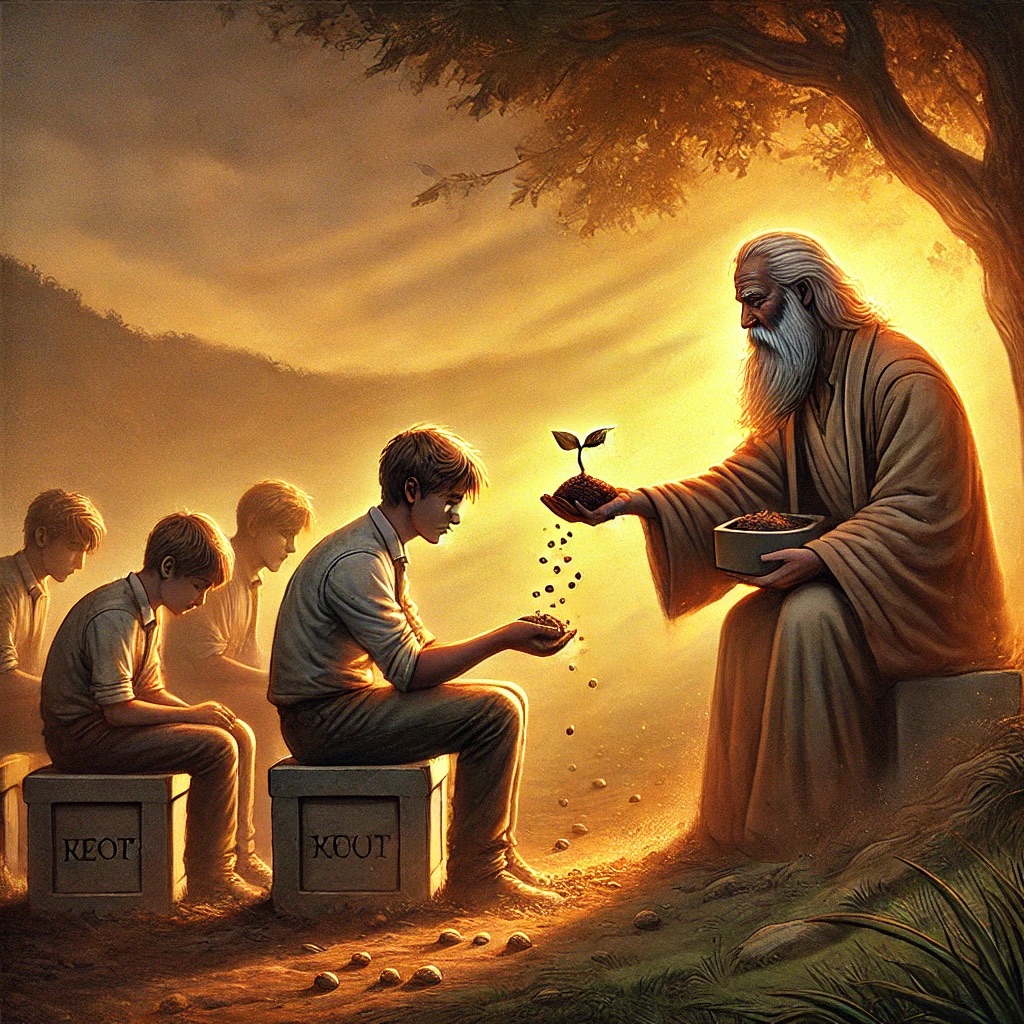
A teacher once gave three students a seed. “This seed holds potential beyond what you see,” the teacher said. “Plant it, nurture it, and return when the time is right.”
The first student planted the seed in fertile soil, tending to it daily. Over time, it grew into a tree, bearing fruit that nourished many.
The second student planted the seed in rocky ground. Though it sprouted, the roots lacked depth, and the plant withered under the sun.
The third student feared losing the seed, so he hid it in a stone box, keeping it safe from harm. When he returned to the teacher, he proudly presented the unchanged seed.
The teacher sighed. “You have kept it from loss, but also from life. A seed unplanted is a tree unborn—a gift wasted.”
The student protested, “But I protected it!”
The teacher shook his head. “That which is never risked can never grow. To hoard what was meant to flourish is to ensure its death.”
The student opened the box, and the seed crumbled into dust.
What you are given is not yours to keep—it is yours to cultivate. Growth requires risk, and to fear failure is to fear life itself.
Christianity – The Parable of the Talents (Matthew 25:14-30)
A master, before leaving on a journey, entrusted his servants with his wealth. To one, he gave five talents; to another, two; and to the last, one—each according to their ability.
The servant with five talents traded and gained five more. The one with two did likewise, earning two more. But the servant with one talent, out of fear, buried it in the ground.
Upon the master’s return, he praised the first two servants for their diligence and rewarded them. Turning to the third, who returned only the single, untouched talent, the master rebuked him for his laziness and cast him out, taking away even the talent he had.
This parable teaches that we must actively use and grow our gifts; neglecting them out of fear or complacency leads to loss and regret.
Judaism – The Lamp Under a Basket (Midrash on Proverbs 6:23)
A man lit a lamp to illuminate his home. Instead of placing it on a stand, he covered it with a basket, fearing the wind might extinguish it. The house remained in darkness, and those inside stumbled.
A neighbor asked, “Why hide the light?”
The man replied, “To protect it from the wind.”
The neighbor responded, “A hidden light serves no one. Let it shine, and it will guide all who see it.”
This story emphasizes that our talents and wisdom are meant to be shared, not concealed. Protecting them too cautiously renders them useless.
Buddhism – The Unused Bow (Jataka Tales)
A king possessed a magnificent bow, renowned for its craftsmanship. Fearing it might be damaged, he forbade its use, displaying it only as an ornament.
Years passed, and when the kingdom faced peril, the king called upon his archers to use the bow. But it had become brittle from disuse and snapped when drawn.
A wise sage remarked, “Tools unused become useless. So it is with our abilities; without practice and application, they wither away.”
This tale illustrates the impermanence of skills left unpracticed and the importance of continual use and refinement.
Islam – The Trust of Talents
A wealthy man distributed portions of his wealth among his three sons before embarking on a long journey. He advised them to use the wealth wisely in service to Allah and humanity.
The first son invested in trade, prospered, and used his gains to support the needy. The second son purchased land, cultivated it, and fed the hungry with its produce. The third son, fearing loss, buried his share to keep it safe.
Upon the father’s return, he praised the first two sons for their initiative and benevolence. Turning to the third, he expressed disappointment, saying, “Wealth concealed benefits no one. Allah grants us abilities and resources to use for the betterment of society.”
This story reflects the Islamic teaching that individuals are entrusted with talents and resources, which they are expected to utilize responsibly for personal growth and communal benefit.
 Airel
Airel 
Leave a comment